
Showing posts with label Ethnic. Show all posts

Memorandum On The Assassination of Rwandan President Juvénal Habyarimana

WHO ASSASSINATED RWANDAN PRESIDENT JUVENAL HABYARIMANA 

by Felicien Kanyamibwa, Ph.D., MqBA.

       ©1999 Felicien Kanyamibwa.

     1. Introduction

    In April of 1994, the small, central African country of Rwanda broke out into an
uncontrollable civil war when hostile missiles shot down its president’s airplane. The
chaos that followed created headlines around the world throughout that summer. 
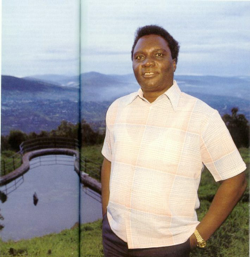
    The world was stunned by the violence perpetuated by what the media consistently referred to as normally peaceful people. Because the shooting of the plane was the trigger that spiraled Rwanda into chaos and civil war, in order to understand what happened, it is important to know who triggered these events, and why. However, there has been no investigation conducted by the UN to uncover the identity of the perpetuators of the sabotage of the presidential plane. In order to pursue peace and reconciliation in Rwanda, those who shot down the plane must be revealed and held accountable. 

     2. History 

    In order to understand the significance of the events surrounding the downing of
President Habyarimana’s airplane on April 6, 1994, it is crucial to have at least a
fundamental understanding of Rwanda’s history. Rwanda’s population traditionally
consisted of 85% Hutu, 10% Tutsi, and 5% Twa. For nearly four hundred years, Tutsis, members of the minority ethnic group, headed by a Mwami (king) ruled the majority of the Hutu ethnic group. The Hutus were treated as “peasants”, and did all of the manual work. Colonialists (Germany and later Belgium) accepted the status quo, and did not try to change the fundamental structure of Rwandan society. 
    
    In early fifties, Hutus began demanding a better representation in the governing institutions. This led subsequently to the 1959 social revolution which was accompanied by fighting between the two ethnic groups. Consequently, an estimated 100,000 Tutsis fled to neighboring countries including Burundi, Congo, Uganda, and Tanzania. 
    
    Bloodshed and violence was rampant during this period. In 1962, Rwanda became independent under their new president, Gregoire Kayibanda. The latter was member of the Hutu ethnic group. For the first time, Hutus were permitted to obtain secondary and post-secondary education.

    In 1973, a coup established Maj. Gen. Juvenal Habyarimana as the new president
Habyarimana who started a relatively peaceful era. Under his rule,Tutsis enjoyed peace and economical prosperity. It should be noted though, that Habyarimana did not allow those Tutsis who had fled during the wake of 1959 social revolution to return massively to Rwanda. The reason put forward was that the country was too small to accommodate such massive return. 
    In fact, Rwanda is one of the most overpopulated countries in the world. However, this created tension, and those exiled Tutsis felt, perhaps justifiably, that
they should have had the right to return to their homeland. Meanwhile within Rwanda, ordinary Hutus and Tutsis went to school together, went to church together, worked side and helped build up an infrastructure that was the envy of that whole region of Africa.
 
This account/essay covers the following points:

3. Climate – Spring 1994
3.1 Burundi
3.2 Uganda
3.3 Invasion of Rwanda
3.4 Assassinations in Rwanda
3.5 The Arusha Accord
3.6 Warning Signs
3.6.1 The RPF Battalion
3.6.2 The RPF and the air traffic Corridor
3.6.3 Meeting of the final preparation
3.6.4 Delay Tactics
3.6.5 Dallaire’s Question
3.6.6 Regional Summit of Heads of State on Burundi
4. The Missile Attack on President Habyalimana’s Plane
4.1 The Night of the Assassination
4.2 Different Reactions after the Assassination
4.2.1 Inside Rwanda
4.2.2 Rwandan Patriotic Front
4.2.3 UNAMIR
4.2.4 President Museveni and His Army
4.2.5 The Tanzanian Government
4.2.6 Government of Burundi
5. Regarding the Arsenals Used to Shoot Down the Plane
6. Possible Suspects
6.1 The Burundese Connection
6.2 The Moderate Opposition
6.3 Hutu “Extremists” from the Former Rwandan Government
6.4 The Rwandan Patriotic Front, with Assistance from its Foreign
Allies
6.4.1 Motive
6.4.2 The Plan to Remove Habyiramana
6.4.3 The Means to Shoot the Presidential Plane
7. The Investigation
7.1 The Interim Government
7.2 The RPF Government
7.3 The United Nations Organizations
7.4 Organization of African Unity
7.5 The Belgian Government
7.6 The French Government
7.7 The American Government
7.8 International Civil Aviation Organization
8. Call for an Independent Investigation
8.1 The Trigger Event of the Rwandan Tragedy
8.2 Need for Justice and Fairness
9. Conclusions

Share:

Au-delà de la Politique Ethnique et de la Peur: Hutus, Tutsis et l’Identité Ethnique au Rwanda

INTRODUCTION 

     Quinze ans après que la petite nation du Rwanda ait connu l'une des pires tragédies de l'histoire moderne, plusieurs problèmes restent en suspens. Alors que la plupart des gens, y compris des experts de la région des Grands Lacs, les organisations humanitaires et des droits humains, les diplomates, les services de renseignement, et des ressortissants de la région des Grands Lacs s'accordent plus ou moins sur les causes sociales des problèmes, ils sont en désaccord presque total sur les solutions possibles. 

     Un consensus s’est dégagé selon lequel la racine du problème reste la politique ethnique et son utilisation dans tous les rouages du fonctionnement de l’état moderne rwandais.  La politique éthnique a permis à la tragédie de se produire et continue à marquer profondément le paysage politique. Plusieurs propositions visant à résoudre ce conflit ont été avancées. Malheureusement, ces solutions semblent ne pas avoir un objectif clair, spécifique, mesurable, faisable, pragmatique, et planifié.. 
    
    Sans objectifs clairement définis, les voies de solution durable à ces conflits dans la région des Grands Lacs, plus particulièrement au Rwanda, ne mèneront nulle part. Ce manque de vision claire a conduit à de multiples invasions de la RDC par le Rwanda et l'Ouganda, la récente invasion de la RDC par le Rwanda par le biais de milices commanditées, et les opérations militaires récentes par la coalition des Forces de Défense Rwandaises (FDR) et l’armée Congolaise, les FARDC contre les milices congolaises ainsi que les rebelles et les réfugiés rwandais.. 
    
    Le monde a expérimenté avec la théorie d’Henry Kissinger que “Si vous ne savez pas où vous allez, n'importe quel chemin vous y emmène” et l’adage de l’empire Romain que “Tous les chemins mènent à Rome” . Le résultat de cette approche chaotique pour résoudre les problèmes de la région des Grands Lacs a été plus de chaos, la perte énorme en vies humaines sans parler des pertes économiques ce qui a rendu le problème encore plus complexe.

Le présent mémorandum tire des enseignements de ma tragédie personnelle, tente de trouver des solutions et propose une approche pour parvenir à une paix durable dans la région des Grands Lacs. Le mémorandum propose d'examiner les méthodes du passé, sans suivre les routes qui ont conduit à l'échec. 

    Comme le poète japonais Matsuo Bashô du 17 ème siècle nous l’a conseillé: "Ne pas chercher à suivre les traces des ancêtres; rechercher ce qu'ils cherchaient."

L'expérience de nos prédécesseurs rwandais nous met en garde contre ce qui a fait échouer leur vision en dépit de leur honnêteté. Nos prédécesseurs rwandais ont cherché à construire une région pacifique et prospère, où les groupes ethniques vivent en harmonie et les individus s'épanouissent, à travers une intégration économique et sociale. Il est du devoir des dirigeants actuels et des générations futures de poursuivre les mêmes aspirations, mais en suivant un autre chemin: la voie au-delà de la politique ethnique et de peur. 

Le présent mémorandum essaie d’en baliser la route. 

La voie proposée s’articule autour de quatre étapes:
  1. Reconnaître les erreurs de la négation des identités ethniques;
  2. S’engager sur la voie de la démocratie consensuelle;
  3. Viser une pleine démocratie;
  4. Ouverture au monde autour de nous en commençant par un bon voisinage et une intégration régionale.
    .
Pour en savoir plus, visiter AfroAmerica Network ici: Au-delà de la Politique Ethnique et de la Peur: Hutus, Tutsis et l’Identité Ethnique au Rwanda par Felicien Kanyamibwa, PhD, MqBA 


Share:

Beyond Ethnic Politics and Fear: Hutu, Tutsi, and Ethnicity in Rwanda

INTRODUCTION 

     Fifteen years after the small nation of Rwanda experienced one of the worst tragedies of the modern history, the core problems remain unresolved. While most people, including Great Lakes Region experts, humanitarian and human rights organizations, diplomats, intelligence services, and Great Lakes region nationals agree on the social roots of the problems, they disagree on the solutions.
     The agreement that ethnic politics constitute the root of the problem remains widespread. Ethnic politics have set the stage for the tragedy to happen and have continued to profoundly shape the political landscape. Several propositions to resolve the conflict have been put forward. Unfortunately, these proposed solutions appear not based on clear specific, measurable, achievable, pragmatic and time-bound objectives. Without such clearly defined objectives, the roads to durable solutions in the Great Lakes region, especially in Rwanda, may only lead nowhere. 
    
    This lack of clear vision has lead to the multiple invasions of the DRC by Rwanda and Uganda, the recent invasion of the DRC by Rwanda through proxy forces, and the combined military operations by the Rwandan Army, Rwandan Defense Forces (RDF) and the congolese army, FARDC, against congolese militias, rwandan rebels, and rwandan refugees. 
    
    The world has been experimenting with Henry Kissinger’s theory that “If you do not know where you are going, any road will take you there” and the Roman Empire narcissistic approach that “all roads lead to Rome”. The result of the chaotic approach to solving the problems of the Great Lakes region has been more chaos, massive losses of life, missed economic opportunities, and making the problem even more complex. 
    
    This memorandum goes from lessons learned from my own personal tragedy and attempts to propose an approach and find solutions to reach durable peace in the Great Lakes region. The memorandum proposes to look at the ways of the past without following the roads that led to failure. 

    As the Japanese poet Matsuo Basho said: “Do not seek to follow in the footsteps of the men of old; seek what they sought.” The experience of our predecessors can teach us what made them fail despite their honest vision. They sought a peaceful and prosperous region, where ethnic groups will live harmoniously, while individuals would thrive, and the region would live in an economic integration. 
    
       For that purpose, our Rwandan predecessors tried ethnic politics and failed: from the seeds of ethnic politics, Rwandans harvested unbearable suffering. It is the task for the current Rwandan leaders and the future generations to follow the legitimate aspirations of their predecessors, but track a different road: a road beyond ethnic politics and fear. The memorandum describes the road as envisioned. 
        The proposition in the memorandum maps four critical phases: 
  • Recognize the fallacies behind the denial of ethnic identities; 
  • Mobilize the Rwandan people for consensual democracy; 
  • Aim for the full democracy, where platforms of ideas will transcend ethnic identities; 
  • Openness to the World, beginning with good neighborhood and regional integration.
For more visit AfroAmerica Network here: Beyond Ethnic Politics and Fear: Hutu, Tutsi, and Ethnicity in Rwanda
Share:

Amazon Summary

Long ago, the people of Rwanda suffered through a terrible famine. The rains did not come to help the crops grow, the grass withered, and the soil became so dry that it cracked. The people looked to their village chiefs for guidance, but the chiefs could not help. They looked to the king, but he could not bring the rain. Only the magical tail of a mystical creature could save the kingdom. Maguru is Rwanda’s best hunter, even better than the king—and certainly better than his jealous village chief. He’s hunted the buffalo, the antelope, and the leopard, but he has never hunted the deadly imparambwe. To save his people, Maguru must now learn to outrun the wind and outwit a creature that can change shape in the wink of an eye. If he succeeds, he’ll be a hero. If he fails, his people will die of starvation. Maguru is determined not to fail.

Legs of Tornado

Legs of Tornado
Legs of Tornado - The Human Who Outran the Wind

Popular Posts

Recent Posts

More on Legs of Tornado

Need our help to upload or customize this Book? Contact me with questions or clarifications and reviews about Legs of Tornado.